 Payal Agarwal
 March 10, 2026
 12 min read
 3481
3481Table of Contents
You have spent months dreaming about this moment, and now it is finally almost here! The nursery is ready, you have reached those final few weeks, and the countdown to meeting your little one has officially begun. Now comes the most important “to-do” left on your list: packing your hospital bag.
For many parents, especially if it is your first time, deciding what to pack can feel overwhelming. You want to be prepared without overpacking. That is why having a clear plan is so vital. This checklist is designed to help you organize your essentials for yourself, your baby, and your partner.
Let’s get you packed so you can head to the hospital with total peace of mind.
When to Pack Your Hospital Bag
Knowing when to pack is just as important as what you pack. Most experts recommend having your bag ready between week 32 and week 36. This gives you enough time to gather your essentials and double-check your list without feeling rushed.
If you are expecting twins or have a high-risk pregnancy, it is best to have everything ready by week 35 since labour might begin a bit earlier. For others, weeks 37 or 38 are safe deadlines. However, try not to leave it later than 38 weeks. You want to be prepared because babies rarely follow a strict schedule. Once your bag is zipped, keep it in an easy spot like the car or by the front door so you can grab it the moment labour begins.
Choosing the Right Bag
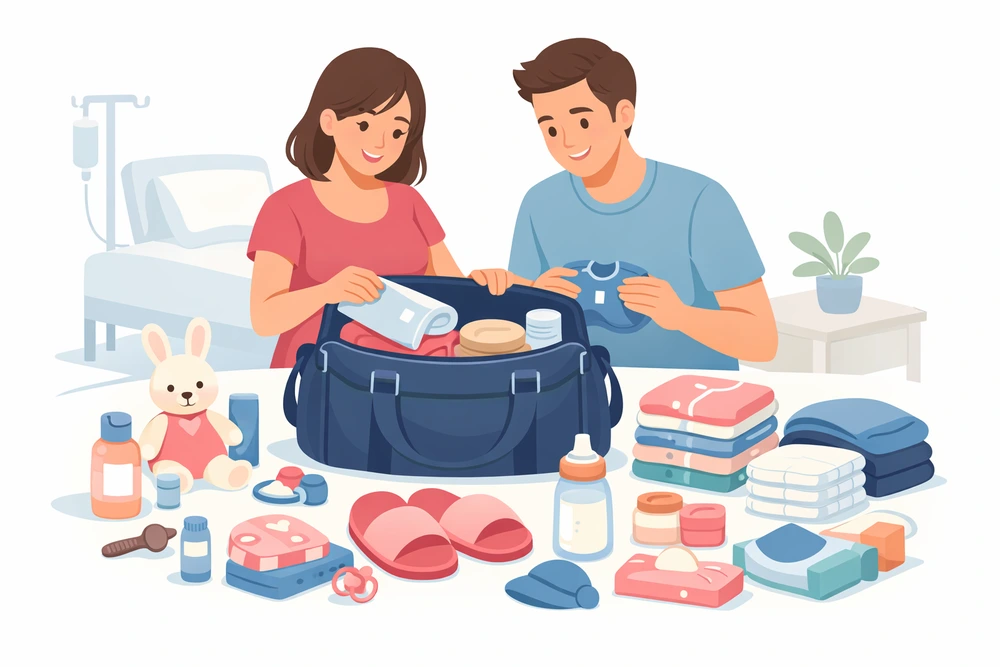
Selecting the right bag should be your first step. Ideally, a large duffel or roomy backpack works best. For ease of access, you might also want to segregate yours, baby’s, and your partner’s belongings into separate bags. This will help you locate items quickly when you need them most.
Hospital Bag Checklist for Mom
On average, a vaginal delivery involves a stay of one to two days. If you have a C-section, you will likely be in the hospital for two to four days. Keep this timeframe in mind as you pack. While some moms prefer to wear the hospital gown the entire time, others feel more like themselves in their own clothes.
Pro-tip: Ask your hospital what they provide for moms. Many facilities supply basic mesh underwear, pads, and even peri bottles. Knowing this ahead of time can save you a lot of suitcase space.
During labour and delivery
This stage is all about staying comfortable and focused. These items will help you manage the environment of the labour room.
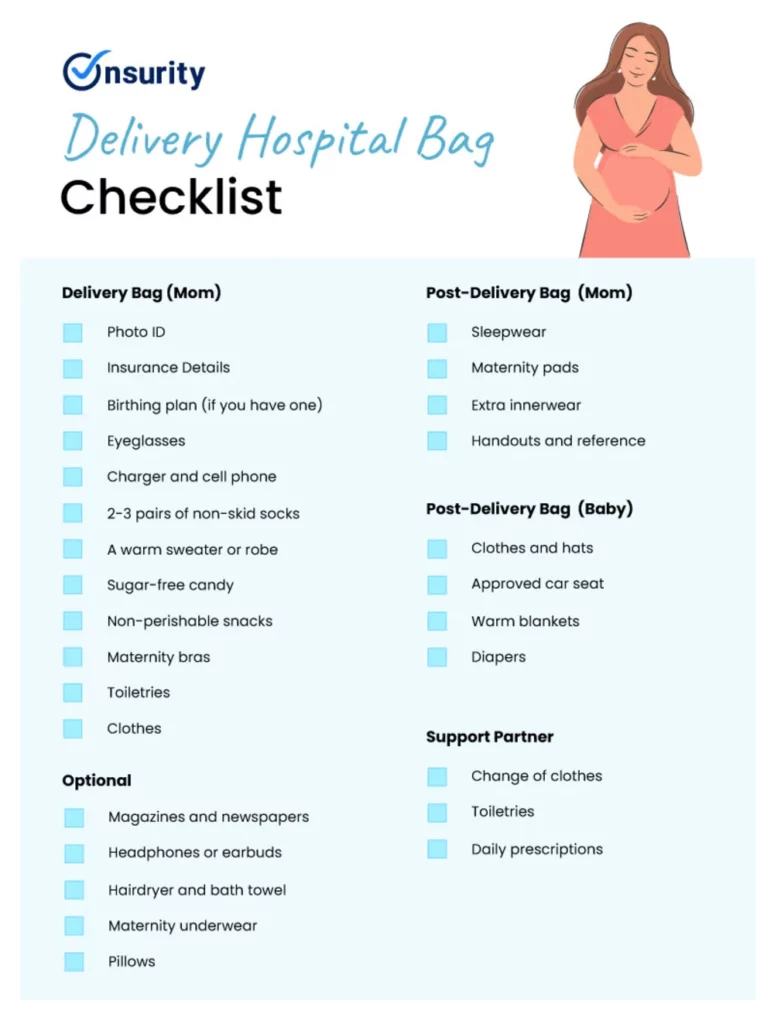
- Essential Paperwork: Keep your photo ID, insurance info, and hospital registration forms together. Also, bring copies of your medical records, ultrasound scans, and doctor’s prescriptions.
- Birth Plan: If you have one, bring two or three printed copies to share with the nursing staff.
- Lip Balm: This is the most requested item. Hospital air is very dry, and breathing during labour will make your lips crack.
- Extra-Long Phone Charger: Outlets are rarely next to the bed. A 10-foot cord ensures you can keep your phone close while it charges.
- Warm, Non-Skid Socks and Slippers: You will want these for walking the halls. Make sure they have grips on the bottom so you don’t slip.
- A Loose Robe or Sweater: Choose something dark-colored that you don’t mind getting messy.
- Hair Ties or Headbands: Keep your hair out of your face. Avoid clips as they can be uncomfortable when you are lying down.
- Water Bottle with a Straw: This makes it much easier to sip water without having to sit up or change positions.
- Small Comforts: Earbuds for music, a handheld fan if you get overheated, and your favourite pillow from home (use a colorful pillowcase so it doesn’t get lost in the hospital laundry).
- Eyeglasses: If you wear contacts, you will likely want your glasses during the long hours of labor.
- Snacks: Pack non-perishable items like granola bars or biscuits to tide you over if your doctor allows you to eat.
- Stress Relief: Items like stress balls and essential oil roll-ons are excellent for managing discomfort and staying calm in the early stages.
Also read: Maternity Planning: Pre-pregnancy healthcare for a healthy baby
For postpartum recovery
Once the baby arrives, your needs change to healing and breastfeeding support.
- Feeding-Friendly Sleepwear: Pack two or three sets of button-down pajamas or front-open gowns. These are essential for easy breastfeeding and skin-to-skin time.
- Maternity Bras and Nursing Pads: Choose comfortable, wire-free bras. Even if you don’t plan to nurse, nursing pads will help with leak protection as your milk comes in.
- Breastfeeding Pillow: This is a game-changer. It supports the baby and saves your arms and back from a lot of strain while you are learning to nurse.
- High-Waist or Disposable Underwear: Regular underwear can be too tight. High-waist pairs are much more comfortable, especially if you have a C-section incision.
- Heavy Absorbency Maternity Pads: While the hospital provides some, having your own soft, heavy-duty pads is a good backup for the first 48 hours.
- Toiletries: Pack travel-sized shampoo, conditioner, body wash, toothpaste, a toothbrush, and deodorant. Don’t forget a hairbrush and any skincare you use daily.
- Towels: Hospital towels are often small and scratchy. Bringing your own bath towel and a soft face towel will make your first shower feel much better.
- Shower Shoes: Flip-flops or rubber slides are a must for the hospital shower.
- Postpartum Essentials: Nipple cream and cooling pads can provide a lot of relief in the first few days.
- Going-Home Outfit: Choose something very loose and soft, like maternity leggings and a tunic. Your body will still feel several months pregnant, so comfort is key.
- Face Masks and Sanitizer: Useful when guests visit or when the hospital requires them in certain areas.
Suggested read: Maternity Leave in India
Hospital Bag Checklist for Baby
While the hospital usually provides the basics like diapers and generic blankets, having your own soft and familiar items makes those first few days much more comfortable. Focus on packing items that are gentle on newborn skin and easy to manage during frequent changes.
- Newborn Outfits (4 to 6 sets): Pack a mix of “Newborn” and “0 to 3 Month” sizes. Choose full-sleeve, front-open cotton tops and matching bottoms or onesies that are easy to put on.
- Coming-Home Outfit: Select one special, weather-appropriate outfit with a matching cap and socks for the journey home.
- Swaddles and Receiving Blankets: Bring 2 or 3 muslin or cotton swaddles and a few lightweight receiving blankets. These are often much softer than the ones provided by the hospital.
- Caps, Mittens, and Booties: Pack 2 or 3 sets to help your baby stay warm and to prevent them from accidentally scratching their face. “Booties” are the soft, fabric shoes or thick socks that keep tiny feet warm!
- Newborn Diapers and Wipes: Pack about 20 to 30 diapers. Include a pack of alcohol-free, fragrance-free wipes or soft cotton squares for gentle cleaning.
- Burp Cloths: Carry 3 or 4 soft cloths or small towels for wiping up dribbles and spit-ups during feeds.
- Diaper Rash Cream: A small tube of barrier cream is useful to have in case of early skin irritation.
- Baby Grooming and Care: Include a soft baby nail file or emery board to safely manage long newborn nails. You can also pack a travel-size gentle baby wash and a soft, hooded towel for their first bath.
- Sterilized Feeding Bottles: If you plan to bottle-feed, bring a few pre-sterilized bottles. These are very convenient for hospital use if you are not breastfeeding.
- Health and Vaccination Records: If your doctor has given you a newborn health booklet or file, keep it handy. The medical team will use this to record early vaccines and health checks before you are discharged.
- Warm Blanket for the Ride Home: A slightly heavier blanket is great for keeping the baby cozy in the car.
- Approved Infant Car Seat: This is a safety requirement. Make sure the car seat is already secured and fitted into your vehicle before you head to the hospital. Most hospitals will perform a safety check to ensure the baby is buckled in correctly before you are allowed to drive home.
Quick read: Paternity Leave in India
Hospital Bag Essentials for Partner/ Support Person
You have put so much effort into your bag and the baby’s essentials, but your partner needs to be ready too. Since you will likely spend a few nights together in the maternity ward, they need their own kit to stay comfortable and focused. Labour can be a long process, and having their own gear means they can support you without needing to leave your side.
- Comfortable Clothes and Layers: Pack a few changes of clothes and a warm hoodie or jacket. Hospital rooms can get very cold at night, so layers are essential.
- Toiletries: Include a toothbrush, toothpaste, deodorant, and face wash. If they are staying overnight, they will definitely want to freshen up.
- Snacks and a Reusable Water Bottle: Labor can be long. Pack high-energy snacks like protein bars, nuts, or fruit to keep their energy up so they can focus on supporting you.
- Phone and Extra-Long Charger: Their phone will be working overtime for family updates and photos. A long cord ensures they can stay charged while staying by your side.
- Camera: If you want higher-quality photos than a phone can provide, bring a camera with extra batteries, a charger, and a spare memory card.
- Hospital Paperwork and ID: Keep insurance documents, admission forms, and ID proofs handy. They may need these for registration or during the discharge process.
- Cash: It is helpful to have some small change or cash for vending machines or hospital services that might not take cards.
- Basic Bedding: Hospital furniture is not always comfortable. A small pillow and a blanket from home can make a huge difference if your partner needs to sleep on a cot or chair.
- Entertainment: Bring a book, tablet, or earphones to pass the time during the quieter hours of labor or while you are resting.
- Daily Medications: Do not forget any prescription medications they take on a daily basis.
Also read: 5 Best Maternity Insurance Plans in India
What Not to Pack in Your Hospital Bag
It is very tempting to pack everything you own “just in case,” but overpacking actually makes it harder to find what you really need. Hospital rooms are often tight on space, and you will want to keep things as organized as possible. Here are the items you should leave at home to keep your bag light and manageable.
- Valuables and Jewellery: Leave your expensive watches, rings, and family heirlooms at home. Between moving rooms and the hustle of labour, it is far too easy for small, precious items to get misplaced.
- A Mountain of Baby Clothes: While those tiny outfits are adorable, newborns spend most of their time swaddled in hospital blankets. You only need a few sets for photos and the trip home.
- Hospital Staples: Most hospitals provide diapers, wipes, disposable mesh underwear, and heavy-duty maternity pads. They also usually give you a peri bottle for recovery. Unless you have a very specific brand you must use, save the space in your bag and use the hospital’s supply.
- Breast Pumps and Extra Parts: If you need a pump while at the hospital, they will provide a medical-grade one for you to use. You do not need to lug your own device and all its attachments with you.
- Strong Scents or Perfumes: Newborns have very sensitive noses, and you want them to get used to your natural scent for bonding. Also, strong fragrances can be irritating for other patients in shared areas.
- “Pre-Pregnancy” Clothes: It takes time for your body to adjust after birth. Skip the tight jeans and stick to the loose, stretchy maternity clothes you have been wearing. Comfort is your best friend right now.
- Work Items: Leave the laptop and the “to-do” list at home. You will be much busier (and more tired) than you think. This time is for you and your baby.
- Heavy Makeup and Styling Tools: Most moms find they are too exhausted to worry about a full blowout or a complex makeup routine. A simple face wash and moisturizer are usually all you will want.
- Large Bedding Sets: While your own pillow is a great comfort, you do not need to bring a full set of sheets or heavy comforters. They are bulky and take up too much room.
Quick read: Benefits of Breastfeeding
Conclusion
Be prepared for the moment labour begins by organizing your maternity hospital bag. By following this hospital bag checklist, you will be better equipped to welcome your baby. This guide covers all the essentials, from important documents to clothing and recovery products, to help you get started with ease.
If you forget something, do not worry. These things happen. You can always ask someone to pick it up for you or buy it from the nearest store. Remember that whatever you need is already available in the hospital, and the biggest gift of all is your baby!
As a part of your maternity journey, having a healthcare partner who is constantly supporting you is very important. With the right company, you can get a comfortable hospital stay with constant medical support throughout your journey.
Onsurity is here to support you at every stage. We provide multiple benefits for expecting mothers, such as teleconsultation support with specialists, discounted medicine delivery services, discounted health checkups, and physical and mental wellness checks to ensure you and your baby are well cared for.
FAQs
1. What are the most important hospital bag must-haves?
Grab your ID, insurance papers, birth plan copies, a super long phone charger, lip balm since rooms get dry fast, slip-proof socks, comfy going-home clothes, baby’s car seat, and 2-3 newborn outfits with swaddles. These keep you covered for paperwork, staying sane in labour, and heading home smoothly. Skip the extras, hospitals got diapers and basics.
2. What size bag is needed for a maternity hospital stay?
A medium duffel bag or a carry-on suitcase that holds a few days of essentials for everyone works perfectly. You can use smaller organizer bags or packing cubes to separate items for yourself, the baby, and your partner. This ensures that everything is easy to find and the bag remains light enough to carry and fit in your car trunk.
3. What’s the earliest I should pack my hospital bag?
If you have a high-risk pregnancy or are expecting multiples, it is best to have your bag ready by week 32. For standard pregnancies, week 36 is a great time to finish packing. Preparing early gives you enough time to review your items and avoids any last-minute stress, as babies rarely follow a strict schedule.
4. What’s the latest I should pack my hospital bag?
You should aim to have your bag ready by week 37 or 38 at the latest. If your doctor has mentioned that you might deliver early, it is best to have everything prepared even sooner. Keep your bag in an easy-to-reach spot, such as your car or by the front door, so you are ready to go the moment labour begins.
5. How many outfits will I need for the hospital?
You will typically need 2 to 3 sets of loose, button-front pyjamas or nightgowns for easy nursing and skin-to-skin time. Additionally, remember to pack comfortable nursing bras and high-waisted underwear. While you can always use the hospital-provided gowns, wearing your own clothes can help you feel more comfortable after delivery.
6. How many outfits should I pack for baby?
It is best to pack 4 to 6 soft onesies in a mix of newborn and 0 to 3 month sizes. You should also include a special take-home outfit, a hat, and mittens. Since newborns are often swaddled, these cotton layers help keep them comfortable and prevent them from accidentally scratching their skin.
7. What do babies wear right after birth?
Immediately after birth, babies usually wear a basic cotton vest, a warm cap, mittens to prevent scratches, and thick socks. They are then wrapped in a swaddle to help regulate their body temperature during their first medical checks.
8. What do moms wear right after birth?
Right after delivery, you will typically wear a hospital gown and mesh underwear with heavy-duty pads. Once you are ready to move around, loose robes or front-opening tops are ideal. Since you will likely be sore and swollen, loose and baggy clothing is much more comfortable than anything fitted.
9. Do hospitals give you a peri bottle?
Yes, almost all hospitals provide a peri bottle after a vaginal birth to help with gentle cleaning. Most hospitals in India also stock these for patients. You only need to bring your own if you prefer a specific type over the standard plastic one provided by the hospital.
10. Do hospitals give you a sitz bath?
Most offer the tub or basin on request for episiotomy soaks, sometimes with salts. Just tell the nurse early; there’s no need to pack the kit yourself.

Senior Executive – Content
Payal specializes in the healthcare, wellness, and insurtech space, with a strong focus on educating businesses about insurance and employee wellbeing. She is passionate about simplifying an industry that is often misunderstood and filled with complex jargon, translating it into clear and practical insights that organizations can easily understand and act on. Through her work, she aims to make the insurance ecosystem more transparent and accessible, helping businesses recognize that prioritizing employee wellbeing is not just a benefit but a responsibility.


